So, regular followers will know that I've done a lot of Microlite20 content - it's my preferred no-prep system, and I use it with any new group to gauge what kind of game they might be interested in.
Well apparently, that work didn't go unnoticed - Seth Drebitko decided to take me on as a partner, so now I'll be sharing my time between here and working on the next generation of M20 content!
We have a few really cool things in the pipeline, so keep your eyes peeled for new content coming from us!
Showing posts with label Microlite20. Show all posts
Showing posts with label Microlite20. Show all posts
Wednesday, 17 August 2016

Monday, 17 November 2014
Pathfinder Minions - The Microlite Approach
I've been wanting to run something a little darker than the usual D&D fare recently, and I feel like Pathfinder might scratch my itch with a few modifications.
But if there's one thing I dislike about the D20 system and its progeny, its the idea that all monsters should be built like PCs. Skill points, feats, oodles of magical equipment to make sure they scale with the party... Its pretty nonsensical. I mean, with all its bells and whistles, a Pathfinder PC can be a little overwhelming at the best of times - now imagine having to run, say, six in an encounter, all with different classes and abilities.
Its fucking ludicrous.
So, I tried trimming the fat from a few of the PFSRD Beastiary entries, and here's an example of what I came up with:
Veteran CR 1/2
XP 200
Init +2; Senses Perception +2
AC 20 (+6 armor, +2 Dex, +2shield)
HP 14
Fort +3, Ref +2, Will +3
Speed 30 ft.
Melee longsword +4 (1d8+3/19–20) or warhammer +4 (1d8+3/x3)
Ranged heavy crossbow +3 (1d10/19–20)
Base Atk +1; CMB +4; CMD 16
Feats Iron Will, Power Attack, Toughness
Skills Heal +2, Perception +2, Survival +5
Gear alchemist's fire, holy water, oil (2), healer's kit (2 uses remaining) breastplate, heavy wooden shield, weapon, 20 bolts, bedroll, tindertwigs (2), whetstone, wooden holy symbol
And that's just the bare-bones combat stats.
Now, compare that with the original:
Superstitious Mercenary CR 1/2
XP 200
Human Fighter 1
Medium humanoid (human)
Init +2; Senses Perception +2
DEFENSE
AC 20, touch 12, flat-footed 18 (+6 armor, +2 Dex, +2shield)
hp 14 (1d10+4)
Fort +3, Ref +2, Will +3
OFFENSE
Speed 30 ft.
Melee longsword +4 (1d8+3/19–20) or cold irondagger +4 (1d4+3/19–20)
Ranged heavy crossbow +3 (1d10/19–20)
TACTICS
During Combat The fighter fires his crossbow, then readies his sword and shield. He saves his alchemist's fire for foes he can't harm or can't hit with his sword.
STATISTICS
Str 17, Dex 14, Con 12, Int 8, Wis 13, Cha 10
Base Atk +1; CMB +4; CMD 16
Feats Iron Will, Power Attack, Toughness
Skills Heal +2, Perception +2, Survival +5
Languages Common
Combat Gear potion of cure light wounds, alchemist's fire, holy water, oil (2), healer's kit (2 uses remaining); Other Gear breastplate, heavy wooden shield, cold iron dagger, heavy crossbow with 20 bolts, longsword, bedroll, tindertwigs (2), whetstone, wooden holy symbol, 3 gp
... I'll be honest, a lot of that comes down to formatting, and cutting bits out that don't suit the setting (I hate that every human-ish NPC carries healing potions). But for a 1st level NPC (not even a real threat to a 1st level party on his own), that's a shitton of space. Writing that out would practically take a character sheet of its own. And this guy is, what, some random thug? The higher level NPCs are atrocious. And don't get me started on casters, with spell lists, domain/bloodline/school powers... Total shitemare.
So I'm going to take a leaf out of an old favourite of mine: Microlite20.
Being a stripped down version of the D20 SRD, its almost totally compatible with PF, with but a few small tweaks. Here's a quicker version of said Mercenary/Veteran...
Veteran CR 1/2 XP 200
HD 1d10+4 (14hp)
AC 20 CMB +4 CMD 16 Saves +2
Longsword +4 (1d8+3/19–20) or heavy crossbow +3 (1d10/19–20)
Skills Phys +4, Subt +2, Know +2, Comm +0
... And that's it. Even then, I could simplify it further, bringing it closer to the old B/X statline, but for a single enemy goon, that's more than enough info for me. I don't need to know detailed combat tactic breakdowns, or what feats he has to give him +1 to this and that, or how many ranks he has in Underwater Basket Weaving - just enough to put numbers to a face.
For proper baddies, I'll be using the previous stripped down stat blocks, and maybe the BBEG will get a full stat block, but only if they're gonna hang around in multiple situations (like where their skill sets and feats might actually come up).
I'll be posting a few more rules hacks and beastiary entries over the next few days, so stay posted!
EDIT: Apologies for the formatting issues, turns out copy-pasting from the PFSRD turns everything into shit (there's a surprise...)
Sunday, 3 February 2013
Have You Heard The Blessings Of The Plaguefather?
So, another bout of the Dread Lurgy as laid me low this weekend. But have no fear - I am currently working, in between illnesses and sleeping.
I'm preparing my entry for the Grand Original Map Contest over at Tenkar's Tavern. I don't want to give away too many details, but a conversation with my girlfriend about Mellified Man and insect worship will play a very strong part in the adventure...
Stay tuned for more details!
I'm preparing my entry for the Grand Original Map Contest over at Tenkar's Tavern. I don't want to give away too many details, but a conversation with my girlfriend about Mellified Man and insect worship will play a very strong part in the adventure...
Stay tuned for more details!
Friday, 18 January 2013
The Gnoma Sutra
Gnomes are known for their sense of humour above all - many take to playing tricks and pranks on their travelling companions, especially those of a more serious bent (like Dwarves, or particularly old Elves). But, amongst their own kind, wordplay takes a particular precedence - leading to the creation of The Gnoma Sutra.
Many claim that there was once a Gnomish Bard, whose name was lost to the mists of time, who collected and categorised each and every one of his sexual exploits, and was always try to *ahem* push the envelope of Gnomish sexuality. His collected writings, The Hundred Thousand Heavenly Dances of The Gnomish People, became a sensation amongst his people, and led to a time of great hedonism, from which most of the Gnomish race was born.
At least, that's what Gnomes tell the other races.
See, The Gnoma Sutra is a game of implication and wordplay. To play, one must make various grandiose boasts about their sexual ability, with reference to a specific passage or position from the "book", but without revealing its most direct meaning. Then, you add as many embellishments and other such details, until one or either of you, or your audience, cannot stop laughing. On various festivals (particularly those centred around Spring and fertility), Gnomes may come from all over the country to gather together and watch master wordsmiths come together to form a filthy tapestry of implied sexual deviance that would cause even the sternest Dwarf to crack a smile.
An example of play:
Garl: Well, my good sir, I will have you know that I, and I alone, am the most experienced here. For you see, I have mastered Number Six-Hundred and Twenty-Seven in the Great Book. It wasn't easy - three of those species of bird are extinct, and the donkey needs a decent attention span.
Nebin: Is that so? Well, myself and the wife attempted a quick Twelve the other night, and I still can't hear out of my right ear.
Sorrasa: Gentlegnomes, please. I am renowned for my mastery of Numbers Eighty-Three (The Monkey Steals a Peach), Two-Hundred and Seventeen (The Farmhand's Daughter) and Two Thousand, Seven-Hundred and Twenty-Eight (The Frumious Digger). And, unlike most ladies who have mastered all three, I can still sneeze on command!
The winner is judged by who gets the biggest laughs (at larger gatherings, a compere will ask for a round of applause for each contestant - the loudest crowd reaction wins).
Such games are not for the faint of heart. Many games will also involve the copious imbibement of alcohol, to allow the words some lubrication, and to loosen the morals of the players.
Friday, 14 December 2012
Hidden Weapons: Some Ideas for D&D

It's something that isn't well represented on the tabletop, so I had a few ideas about how to implement such things:
- Polearms with hidden blades allow you to switch from a reach weapon to a close-combat dagger as a Free Action (instead of a Free Action to drop the weapon, and a move action to draw another one). Useful for swarms of small enemies who can get right on top of you.
- Maces (I'd also allow clubs, greatclubs, morningstars and most other blunt weapons) with blades hidden within the handle allow you to switch from Blunt/Bashing damage to Slashing damage as a free action once per encounter - useful if you get swallowed whole by some huge beastie and need to cut your way out. Should you roll a Critical Failure in combat, causing you to lose or damage your weapon, you can negate the failure by switching to the other weapon (though the attack is still considered a miss).
Friday, 30 November 2012
Microlite20: Skyrim's Nords
So, I have a friend who's never played D&D before coming home from a placement out in Canada, and I've managed to convince her to play a game when she gets here.
When chatting about character concepts, she said she wanted to play her Skyrim character - a brutal Nord warrior-woman.
Well, the Fighter (or one of the Barbarian homebrews) will fit perfectly for the Class, and I'll maybe work up a nice Advance scheme for her, but the Race is a little different from your baseline Human.
So, here's my first draft:
Nord
+1 STR, Resist Cold 5
Nord Advances
Battle Cry - you can Cause Fear as a Mage of your level once per day, with no HP cost
Warrior Culture - you gain +1 to-hit and damage with greatswords, battleaxes, and clubs.
Legendary Endurance - your Resist Cold increases to Resist 7
Hardy - you gain a +1 Natural Armour bonus
Rough Demeanour - you gain a +2 bonus to any rolls to Intimidate.
Looks good so far, but I might tweak it later. I'm also considering converting a few more Races from Skyrim to M20, and there's a sick little part of me that wants to work up a Dovahkin Class...
Wednesday, 28 November 2012
Planar Undead: The Heroic Dead of Ysgard

Sometimes, this never-ending battle can have strange effects on those who fall. The Plane has a slight bias towards Positive Energy - even the direst injuries are healed with great speed, and those who die are simply reconstituted the morning after their death (as if under the effects of a True Ressurection spell). Those who die many, many times may find themselves returning as one of the Heroic Dead - a strange form of Undeath, bestowed by the Plane to those who have proved their valour and glory time and time again.
They appear as themselves, wearing the armour and weapons they used in life (and still just as skilled, too), though they posess a shining, radiant quality. They appear "more" - they are taller, faster, more muscular, a shining example of their species. Their voices echo with power, and their will is unbreakable.
Consider this a "template", to apply to any humanoid (and a few distinctly less so), though other creatures like Dragons might also qualify, if they have proved themselves worthy.
AC - 18, regardless of armour
HD/HP - 8HD/Max HP per die (or more, if the base creature posesses more HD)
Attacks - 2, Favoured Weapon, +4 to hit
Alignment - CG
Special Attacks - the Heroic Dead can exude Positive Energy to Turn Undead as a Cleric of their HD. The Heroic Dead are also resistant to the level draining effects of other Undead, though other Negative Energy attacks may harm them as normal. Heroic Undead also have all other Undead qualities (immune to Charm and Illusion spells, etc).
Sunday, 18 November 2012
What I Want To Run
I'm getting a hankering for GMing once again, so I'll post up what I fancy running in case I can direct a few people here to choose what they want to play.
Also, should anyone in the Glasgow area fancy one of these games... well, leave a comment and we'll see what we can do!
The Sacred Art of Stealing
This city is rotten. The Noble Families have wrought nothing but nepotism and corruption here - how often do the streets run red with the blood of innocents due to their personal, petty struggles?
The Guard has either fallen or joined their cause. They become more brash - practically criminals themselves, bar a dedicated few. There's no guilds, unions, or organisations left that haven't had the taint of their hand in their ranks.
Well, there is one... The Thieves Guild.
Players take the role of members of the Valerian's Reach Thieves Guild, the only organisation not infiltrated by the local Noble Families to be used in their wars over territory and personal squabbles. It's time they learned their lesson - the hard way.
Let me tell you something. The world isn't what it seems. Behind closed doors, under the cover of night... things stir and toil against humanity. Witches who cloud the minds of men. Beasts who take human form, to better prey on us. Creatures of the night who survive by killing us, devouring our souls to reproduce. Ancient entities that walked the Earth before life was truly born.
And we won't stand for it. Each of us... a candle against the unending night. We won't ever "win" - no one candle can light up the darkness. But enough of us together, we can push it back, even just a little.
And if we're lucky... well, it only takes one candle to start a wildfire.
Tool up. We're going hunting.
Players take the role of Hunters in the World of Darkness version of Glasgow - a bright, striving city by day, which hides a seedy underbelly of corruption, death, and the occult. Can you defend your homes, your families, the innocents of the city, with little more than your bare hands, your wits, and sheer determination?
It is the 41st Millennium. For more than a hundred centuries the Emperor has sat immobile on the Golden Throne of Earth. He is the Master of Mankind, and master of a million worlds by the might of his inexhaustible armies. He is a rotting carcass writhing invisibly with power from the Dark Age of Technology. He is the Carrion Lord of the Imperium for whom a thousand souls are sacrificed every day, so that he may never truly die.
To be a man in such times is to be one amongst untold billions. Fortunately, you are not just a man - you're one of the richest men that humanity has ever seen. You are a Rogue Trader, and the uncharted depths of the galaxy are your playground. You and your closest advisors plumb the darkness, find lost human civilisations, dread xenos, The Witch, The Mutant, and The Heretic. And, most importantly, profit.
There is no peace amongst the stars, only an eternity of carnage and slaughter, and the laughter of thirsting gods.
Strap on your most expensive hat, and wolf down this white truffle and caviar sandwich, Lord-Captain - we're going to Hell and back.
Players take the role of a Rogue Trader and his crew, plundering the stars for fame and profit. You'll face problems, enemies old and new, invasions, and the results of your own
Also, should anyone in the Glasgow area fancy one of these games... well, leave a comment and we'll see what we can do!
The Sacred Art of Stealing
This city is rotten. The Noble Families have wrought nothing but nepotism and corruption here - how often do the streets run red with the blood of innocents due to their personal, petty struggles?
The Guard has either fallen or joined their cause. They become more brash - practically criminals themselves, bar a dedicated few. There's no guilds, unions, or organisations left that haven't had the taint of their hand in their ranks.
Well, there is one... The Thieves Guild.
Players take the role of members of the Valerian's Reach Thieves Guild, the only organisation not infiltrated by the local Noble Families to be used in their wars over territory and personal squabbles. It's time they learned their lesson - the hard way.
- Mission-based, with sandbox elements (so, the players will receive specific orders from their superiors, but are free to pursue them as they see fit, as well as "downtime" between missions where they can follow personal plots and side-quests).
- Gritty, low-powered game - players should be able to think their way out of trouble, rather than rely on their combat abilities.
- Low Magic - magic items are rare (as in unpurchasable, for the most part), and access to spellcasting will be limited. There might be simple firearms (black powder weapons), depending on interest.
- Either 3.5 or Pathfinder, using the E6 variant and a few other tweaks.
Let me tell you something. The world isn't what it seems. Behind closed doors, under the cover of night... things stir and toil against humanity. Witches who cloud the minds of men. Beasts who take human form, to better prey on us. Creatures of the night who survive by killing us, devouring our souls to reproduce. Ancient entities that walked the Earth before life was truly born.
And we won't stand for it. Each of us... a candle against the unending night. We won't ever "win" - no one candle can light up the darkness. But enough of us together, we can push it back, even just a little.
And if we're lucky... well, it only takes one candle to start a wildfire.
Tool up. We're going hunting.
Players take the role of Hunters in the World of Darkness version of Glasgow - a bright, striving city by day, which hides a seedy underbelly of corruption, death, and the occult. Can you defend your homes, your families, the innocents of the city, with little more than your bare hands, your wits, and sheer determination?
- Hunter: The Vigil Chronicle (nWoD system) with a few of the Hacks from various sources.
- Somewhat more "heroic" than normal, but still deadly and grim.
- Sandbox - choose how and where you wish to protect, and be prepared for assaults from all sides.
- Players should expect a lot of investment in the setting - they'll be setting up relationships, creating NPCs and locales, maybe even helping to dictate the enemies they face.
It is the 41st Millennium. For more than a hundred centuries the Emperor has sat immobile on the Golden Throne of Earth. He is the Master of Mankind, and master of a million worlds by the might of his inexhaustible armies. He is a rotting carcass writhing invisibly with power from the Dark Age of Technology. He is the Carrion Lord of the Imperium for whom a thousand souls are sacrificed every day, so that he may never truly die.
To be a man in such times is to be one amongst untold billions. Fortunately, you are not just a man - you're one of the richest men that humanity has ever seen. You are a Rogue Trader, and the uncharted depths of the galaxy are your playground. You and your closest advisors plumb the darkness, find lost human civilisations, dread xenos, The Witch, The Mutant, and The Heretic. And, most importantly, profit.
There is no peace amongst the stars, only an eternity of carnage and slaughter, and the laughter of thirsting gods.
Strap on your most expensive hat, and wolf down this white truffle and caviar sandwich, Lord-Captain - we're going to Hell and back.
Players take the role of a Rogue Trader and his crew, plundering the stars for fame and profit. You'll face problems, enemies old and new, invasions, and the results of your own
- Total sandbox - I'll throw out a few plot hooks, but this is a game driven by the crew's thirst for profit.
- The tone will be skewed towards "grimdark" - an incredibly serious game, so serious it's totally ridiculous. Mainly though, it's pulpy action and adventure/investigation/whatever you get up to.
- I have a few systems in mind for this one. First, Risus - I laid the groundwork for such a game here. And, again, MiniSix40k has passed through my mind, too.
- There's an awesome Apocalypse World Hack here which is the most likely system.
Thursday, 15 November 2012
Planning a Delve: Themeing Your Dungeon
 |
| How awesome is this! |
So - you want to make a dungeon. You've got some cool ideas, an awesome map, even found something horrible from the Monster Manual for a great boss-fight for the end.
But what is your dungeon?
The theme of your dungeon helps to figure out why it's there, what's in it, and what the players will do once they get there.
Location-based dungeons can be easy to theme. Say it's a Wizard's Tower - you need some weird magic-based monsters (Living Spells, unusual Undead, Owlbears, Animated Objects), unusual traps (either traps explicitly made using magic, or "natural" hazards like pools of pure elemental matter, doorknobs that have been supercharged with electricity, etc), and some cool set-pieces (like a battle that occurs in a room with no gravity, or an area that continually shifts between the different Elemental Planes, or a series of rooms hooked up via teleportation gates).
Another easy way to work out your dungeon's theme is to think what type of creatures might inhabit it. For a classic example, The Crypt Full of Undead. You've seen it so many times, the ideas practically roll onto the page unbidden (creepy surroundings, no light sources, a few cursed items, skeletons, zombies, a couple of souped-up versions like Ogre Zombies or something such, weird encounters, spirits, bugs, ancient yet still functional traps, etc). While it might seem cliche, you can mix it up a little with underused monster types - an all Aberration dungeon (maybe a cave system with a link to the Underdark or Far Realms) could be really interesting, as could the legendary Ooze-based dungeon (you don't want to know where they all came from...).
Picking a theme, however, should mean more than picking monsters out of the books. If you do take Aberrations as your theme - did you pick them because they're weird? If so, make sure the dungeon reflects that. Non-Euclidean geography, maps that lie (or areas that constantly change shape), the chance of madness for PCs, a few mind-screw elements here and there... really amp up the theme of weird. If it's a tomb full of Undead, is your theme Horror? If so, make sure the descriptions of the Undead are terrible to behold, that there are hints of their past lives (or perhaps the suffering they are/were going through before becoming shambling horrors).
Even try and add a little fright into the metagame, by using Undead the players are not familiar with - whether from more obscure books, or made up yourself (and because I love to plug his awesome work, Dyson Logos has a great table for Unusual Undead Abilities) - when your players face off against a horde of zombies, only to find out each of them can teleport, or throw lightening bolts into the group.
Similarly, if you want to take things down a Cliche route for laughs, then ensure that everything's been done before - there's snakes (why did it have to be snakes?), mummies, trapped sarcophagi, legions of skeletal warriors, and dark wizard at the end... you know the drill. Try and add some light-hearted elements, like an Obviously Evil Bystander who turns out to be the villain, some comical mid-dungeon NPCs, whatever you want to reinforce the idea of humour.
My theme for this dungeon will be "Magic and Illusion" - as such, I'll be making a (not-so) Abandoned Wizard's Tower, which allows me quite a lot of leeway in how I go about it!
Wednesday, 7 November 2012
Planning a Delve: Dungeon Generation
So, as either a useful introduction for newcomers to the RPG scene, or a fun exercise for the more experienced, I'm going to run through the creation of a dungeon, from start to finish, with commentary about each step and the pitfalls that I personally face.
While making dungeons for a campaign is a deep, involved process, I didn't want to add more trouble (and limit the usefulness) of the dungeon by tying it to a particular game, so I plan on making it a stand-alone dungeon, perhaps for a sandbox-style game I might run at some point. I'll include some tips on campaigns and such as I go, no doubt.
The first part should be up tonight or tomorrow, focusing on the first thing you have to decide on when making a dungeon: theme. Whether it's a Wizard's Tower, a pit of unfathomable abominations from beyond time and space, or a natural cave system overrun with bandits, the theme of the dungeon needs to be established early on!
Wednesday, 31 October 2012
Random Table: You Find Some... Meat
Yes, I'm in a weird Random Table mood.
Many humanoid creatures are known for not being too choosy what they eat. They can survive on the barest of rations, heartily supplemented by scraps of meat they find or take from kills and dry in their lairs.
Should your players locate such a lair, and such a food supply, roll on the table!
1. Dog/Wolf - stringy, tough, tasteless
2. Horse - succulent, tough, smells good
3. Rat - not as bad as you'd think, brownish, chewy
4. Small Bird (pigeon, chicken) - white meat, gamey
5. Large Bird (ostrich, roc) - strong taste, white meat, soft
6. Snake - white, fishy, 25% chance of being poisonous
7. Boar - strong-smelling, tasty, sweet, dark red meat
8. Cow - you know beef!
9. Rabbit - gamey, tough, tasty
10. Monstrous Humanoid - tough, smells terrible, full of protein
11. Human/Demi-Human - roll on table below
12. Magical Creature - varies, roll on table below
Sub-Table: Human/Demi-Human Meat
1. Human - tastes just like pork
2. Elf - light, almost white meat, delicious
3. Dwarf - tough, dark, chewy, tastes faintly of alcohol
4. Gnome - tough, salty, gives off a mild magical aura
5. Halfling - light, tender, soft
6. Half-Orc - tough, tastes weird, full of protein
Sub-Table: Magical Creature
These meats have not only been dried, but preserved with various magical reagents to keep some of the animal's natural magical properties. If you roll these while stocking a dungeon, try having some of the smarter monsters eat these before battle.
1. Salamander - slimy, chewy, grants Fire Resistance 5 for 30 minutes
2. Displacer Beast - tasteless, stringy, grants +2 dodge bonus to AC for 30 minutes
3. Blink Dog - stringy, tangy, grants Dimension Door 3 times within 30 minutes
4. Darkmantle - rank, slimy, overpowering, grants +3 bonus to Hide and Move Silently for 30 minutes
5. Phase Spider - white, gritty, grants See Ethereal for 30 minutes
6. Remorhaz - gritty, always warm, slimy, grants Burning Hands 3 times within 30 minutes
7. Frost Wurm - crunchy, always freezing cold, grants Cone of Cold 3 times within 30 minutes
8. Gorgon - very tough, crunchy, grants a +3 bonus to Fortitude saves/Save vs. Paralysis for 30 minutes
9. Lesser Demon/Tiefling - grants a +1 profane bonus to-hit for 30 minutes
10. Lesser Celestial/Aasimar - grants a +3 bonus to all saving throws for 30 minutes
11. Chaos Beast - grants 1 random mutation (make yourself a table, or borrow one from somewhere)
12. Doppelganger - grants Alter Self 3 times within 30 minutes
Remember - many of these creatures are sentient, and knowingly devouring their flesh is considered an Evil act.
Monday, 29 October 2012
Random Table: Weird Spell Components
Say you have an eeeevil Wizard as your next bad guy. You want to make him pretty powerful, so you give him a few weird and wonderful spells from a few weird and wonderful splatbooks. But, your players want to take the or their own, and they've bypassed the magic puzzle-lock to get to his spellbook, disarmed the traps that surround it, and dispelled the Explosive Runes on every page.
They want magical power like the Big Guys? Then they need to make a little sacrifice... literally. This table also makes a great resource for those raiding the potion cabinets of a variety of evil necromancers, mad scientists, etc.
Each ingredient here gives some sample spell-types it will be useful in. Capitals denote specific spells, domains or spell schools.
Where a specific class or race is mentioned, the higher the HD, the more powerful the effect.
1. The blood of an innocent, sentient creature, bathed in the light of the moon (lycanthropy, Divination, sympathetic magic)
2. The heart of a freshly-fallen Paladin (courage, strength, corruption)
3. The eyes of a Wizard who specialises in Divination, torn out while they were in a Seer's trance (True Seeing, Divination, sight, Metamagic)
4. The tongue of a Bard, preserved in oil from a poisonous plant (lies, deception, poison, Glibness)
5. The severed member of an Incubus (or similar 'male' sexual demon), preserved in Abyssal fluids (Evil, seduction, Charm, corruption)
6. Dwarf blood, permeated with the wyrd energies of the Underdark (transformation, strength, Earth, Evil)
7. Scales taken from a Metallic Dragon (Scalykind, appropriate elements, courage)
8. The bones of a true King (Charm, royalty, binding)
9. Hair (at least 5 foot in length), taken from a corpse (Necromancy, beauty, Death)
10. The powdered spikes of a Spinagon, bathed in the energies of Limbo (pain, damage, Evil, transformation)
11. The pickled tentacles of some Far Realm beast (insanity, Chaos, planar magics)
12. Water exposed to the Negative Energy Plane for a year and a day (water, Evil, chaos, Time)
Thursday, 25 October 2012
Another Technical Delay...
This time, self-imposed - I have updated the old Notebook O' Doom to Linux.
I now have it up and operational, which will mean that regular posting should be resumed shortly.
What I've got in the pipeline:
I now have it up and operational, which will mean that regular posting should be resumed shortly.
What I've got in the pipeline:
- A few mini-dungeon maps I've been doodling
- A short adventure for Microlite20, which I've ran with a couple of groups
- Some more Microlite20 House Rules and Advances
- A few reviews
- Possibly the start of a series of adventures for the Kobold Ascension Fight campaign (system still undecided)
- Some more MiniSix40k stuff
- The Warrior's Guide To Being a Fighter
Thursday, 18 October 2012
Microlite20: Hireling Advancement
Well, PCs get to advance as they face challenges and defeat their enemies - what about Hirelings?
Mircolite20's advancement system relies on the average level of your group - but Hirelings can make you somewhat more effective than would be expected. Torchbearers and Sages might not really assisst too much, but having a cadre of ten Men-at-Arms could really throw those numbers out.
If the players are using loads of Hencemen, consider not levelling any of them up - they're working as a large group of "mooks", and probably won't be learning anything they don't already know. But, if they only hire 1 Man-at-Arms, and he survives to the point that the players level up, consider adding a level of Fighter to the stat-block provided. If that seems a little too generous, maybe add +1 to-hit and +1 to one skill. Similarly, for other Hirelings, make them just a little bit better at what they do - a +1 here or there can show some advancement, while not allowing them to overshadow the players. As Sages don't come along with the party, I wouldn't go about leveling them up - unless the players bring them tomes of arcane lore, or something similar. Then, sure, give them a little +1 or +2, maybe even just to specific areas of research, to let the players feel a little bit more of a part of the setting as well as the game. Then, you open up more adventures, to find more books, and before you know it, the PCs are choosing to go raiding the lair of an Elder Dragon, just so their friendly local Sage can get himself a +1 t his Knowledge (Basket Weaving) skill... the game writes itself!
Or, you could take it as a "story-based" thing - say the PCs have three henchmen - a young torchbearer, a scribe, and a warrior. Which one do they seem to like the best?
Maybe the scribe takes maps, and has little other interaction with the group, and the warrior is pretty much a nameless meatshield for the party - they're not going to get a level-up. But maybe the young torchbearer saved the Fighter's life, and he wants to take him on as a squire. That warrants a level of Fighter, in my book, especially if the players are already a few levels above 1st. It helps that character to be more effective, and also allows the players to keep around a favoured NPC.
Just do what seems cool and appropriate to the character and the story, and you should be fine!
Tuesday, 16 October 2012
Good News - The Return of Dyson Logos!
Yep, Dyson's back with another geomorph, and apparently 60 more waiting to be scanned and uploaded!
The only problem is, the poor guy doesn't have any internet...
I'm looking forward to seeing the rest of these - Veratheth's Retreat looks pretty swish, so swish in fact I'm currently planning on running a little Risus Dungeon Crawl with it soon...
He's also inspired me to try my hand at some mapping - watch this space!
Wednesday, 10 October 2012
Microlite20: Hirelings: Dogs In The Dungeon

Another old-school element that has been lost to the wayside - the use of trained animals in dungeon crawling. I mean, sure, the Druid has their Animal Companion, and the Ranger can no doubt train up a few animals in his spare time, but back in the day, animals were prized as extra luggage handlers (and loot-carriers), and as valuable parts of tactical combat - as well as being capable of a few other tricks.
These animals follow the same rules for my previous Hireling stat-blocks. Here, cost reflects the purchasing of an animal already trained for a life of dungeoneering. They normally consume either half-rations (for smaller breeds), a full count of rations, or twice that for larger or unusual breeds.
Mundane Breeds
These animals are clever, but not intelligent - if needed, consider them to have a MIND score of 2. They can be trained to perform specific actions using a series of MIND+Survival rolls, over as long as the GM sees fit, with bonuses (and a shorter timespan) for clever techniques.
Small But Vicious Dog
 The Small But Vicious Dog has been a staple of fantasy gaming since WFRP. Now you too can own a psychotic pet who might be more capable in a fight than you are!
STR -2 DEX +1
Skills - Survival +2, Subterfuge +1
Bite +1 - 1d3-1
HP - 3 AC - 14
Special - the SBVD is particularly effective against Small opponents - it can latch onto them (+2 to-hit) and begin tearing at them, causing 1d3 damage every round it remains attached (STR+Phys vs the attack roll to break free).
Cost - 2gp
Breeds - Dungeon Terrier, Halfling Harrier, Goblin Shaker, Kurathi Rustler
Hunting Dog
 These animals are of a variety of breeds, but they have one thing in common - an exceptional sense of smell. They are bred to hunt smaller animals, and to find those who wish to escape - city guards the land over use these dogs when searching for escaped convicts.
Skills - Survival +5, Subterfuge +2
Bite +1 - 1d4
HP - 5 AC - 10
Special - while they are great at tracking just about anything, some are bred and specially trained to locate certain types of creatures (like Orcs) or specific plants (like truffles or medicinal herbs). These Hunting Dogs get an extra +2 bonus to any rolls to locate the target of their training.
Cost - 5gp
Breeds - Setter, Bloodhound, Tracker, Watchman's Friend
Wolfhound

STR +1 DEX +1
Skills - Survival +1, Physical +3
Bite +3 - 1d4+2
HP - 6 AC - 12
Special - the Wolfhound can Trip opponents (-2 to hit), and once down, can pin them down (STR+Phys vs STR+Phys each round) and attack their vitals, causing 1d4+2 damage every round they are attached.
Cost - 10gp
Breeds - Varag, Krynnish Warhound, Snarling Marshdog
Mountain Dog
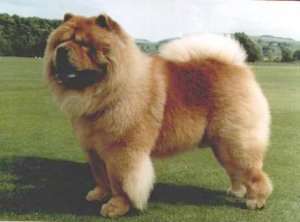
STR +2 DEX -1
Skills - Survival +3, Physical +3
Bite +3 - 1d6+3
HP - 10 AC - 12
Special - the Mountain Dog is adept as sensing trouble, and can hear opponents from 100ft away (adjust as conditions change). It will inform its master through a low growl when it senses trouble.
Cost - 20gp
Breeds - Chi-Tzu, Chow Chow, Guardian, Cata
Exotic Breeds
These animals might have strange parentage, unusual abilities, or might just be outright supernatural. Expect to pay top dollar for these pets, but they can more than make that money back.
Goblinhound

STR +1 DEX +1 MIND +1
Skills - Survival +2, Subterfuge +3, Physical +1
Bite +2 - 1d6+1, Claw +2 - 1d4+2
HP - 20 AC - 16
Special - the Goblinhound can understand spoken language, though it cannot communicate or read. These animals do not need as much training as others (though they will not tolerate abuse) and can carry out incredibly complex orders - they are almost as intelligent as most people. Additionally, for every 2HD of flesh the Goblinhound consumes, it gains a +1 bonus to its STR and DEX scores (to a max of +3) for 1 hour/2HD eaten.
(For the purposes of the Goblinhound's Special Ability, regular rats and small birds count as 1/4HD, and larger animals like chickens 1/2HD. The GM is the arbirtrator of what HD value non-statted animals have.)
Cost - 100gp on the open market, 50gp straight from a Goblin breeder.
Drake

STR +2 MIND +1
Skills - Survival +3, Subterfuge +2, Physical +2
Bite +3 - 1d6+2 Claw +2 - 1d4+2
HP - 20 AC - 16
Special - Drakes are bred to show traits from certain breeds of dragon, and all have a breath weapon (+3, 1d8) which they can use a number of times a day equal to their STR bonus. The damage caused by this matches the breed of dragon they most resemble (so, Fire for Red/Gold, Acid for Black, etc.) They can also cause Fear (as the spell) with their bark 3/day.
Cost - 200gp on the open market, or possibly worth a favour for a Dragon. Kobolds see these animals as sacred, and will not sell them.
Monday, 8 October 2012
Microlite20: Bard Specialist Advances
Keeping a roll on... here's The Houri, the first Bard Specialist Advance, inspired by a post my good friend Dangerous Brian made, updating the class from an old White Dwarf issue for OSRIC.
The Houri is an entertainer, first and foremost, and a concubine second. She uses her charm and natural grace to enthrall any onlookers, and finds that many are taken by her looks as well. Many have been trained by high-society madames, moulded into the very image of what the rich and powerful want to see in a woman.
Note that, in this case, men can qualify for the Houri Advance - simply change its name to "Courtesan", or something suitably exotic.
Houri
Bard Specialist Advance
Enchantress - you gain a +2 bonus to your Communication skill when used for seduction.
Presence - you gain Charm Person as a spell-like ability, cast as a Signatue Spell.
Flexible - you gain a +2 bonus to any Skill check which requires flexibilty (say, dancing, escaping bonds, or particularly exotic bedroom moves).
Exotic - you gain +1 to-hit and damage with whips, chains, daggers (stilletos and the like), and bows.
High Class - you gain a +2 to any rolls involving nobility (whether charming them, or remembering facts about specific Royal lines and history, etc).
Sunday, 7 October 2012
The Lowlife's Guide To Being A Thief

"There's only two types of thief, boy - the good ones, and the dead ones."
-Ari Blackhand, Head of the Valerian's Reach Thieves Guild
After the success of The Gentleman's Guide To Being A Bard, I thought I'd try my hand at another little "D&D general" guide, this time focusing on one of my personal favourite Classes - The Thief/Rogue/Expert/Whatever.
Thievery has been around since the first man who looked to his brother, and thought "His rock looks better than mine!" - most agree it's the second oldest profession (and, indeed, members of the oldest profession frequently use such methods as well!). The Thief fills a certain societal niche - lower than the common man, for cutpurses and muggers, but somewhat more upwardly-mobile than the beggars that fill their streets.
There are a dozen archetypes of the Thief - the black-clad assassin, the dashing rogue, even the jack-of-all-trades Bard started out life as a Thief sub-class. But the main points are being light of feet and fingers, stealthy, and quick-thinking.
1. Know Your Role
You're not tough enough to be a front-line fighter, even though you might be good with a sword - your role in combat is to assist - set up flanking manuvers (for your tasty Sneak Attack bonus), pelting foes with ranged weapons, and acting as a "backup" when the Fighter goes down. As a player, you should be maximising the amount of times you can use your Sneak Attack - so, set up ambushes, adjust the lighting, set or re-set traps, get yourself and others into flanking positions, and generally think like a sneaky bastard.
Outside of combat, you are the skills guy - you check for (and disarm, hopefully) traps, you pick locks, you charm your way past guards, and generally make yourself as useful as possible. Again, play to your strengths - know which skills you can use more reliably than others, and know which party members are better than you (and defer to them when needed). You're also the best Scout in most parties - your stealth and perceptive abilities are second to none, so make sure you go ahead of the group to get the lay of the land, and report back with a multitude of ways in which you can turn the fight in your favour.
For Old-School games, the Thief is also one of the few Classes that most demi-humans have unlimited advancement in (depending on the game) - while not useful for most games (which never reach past the 10th-level mark), anyone planning on playing a demi-human in a long-running campaign could do worse than to dual-class with the Thief. Those Thief Skills can be put to great effect by most Classes, and it's always good to have a back-up trapfinder! Plus, once you hit the level cap for your other class, you still have somewhere to put (half) your XP, instead of it going to waste.
2. Play To Your Strengths
 |
| Goddamn stupid sexy midget... |
Whatever system you're using, Dexterity is key. For older systems, it affects your Thief skills percentages, making it a vital component of being a great Thief - but, random generation might screw you over. For the more modern ones, it can affect your key skills which revolve around mobility and balance - and trust me, you're going to need them! Dexterity can also affect your ability with ranged weapons - something we'll get on to later.
Intelligence isn't too big a deal in older systems - it can affect how many languages you can learn (and a good Thief should have ways to communicate privately!), and might be used when determining traps or lies (both pretty useful), but these can also be covered with good role-play and thinking like a Thief - trust no-one, everything's trapped, and remember, it's not paranoia if they are out to get you. In newer editions, it can affect how many extra skill points you get - though Rogues do get a huge amount, so it's not essential. Then again, more skills is never a bad thing, so a decent Int score is always a good investment.

Charisma can go either way - depending on whether you're a skulking ruffian, or a smooth-tongued trickster. If you plan on spending all your time hiding in the shadows, leaping out only to delicately plant a knife between someones shoulder blades, forget it. Otherwise, it lets you lie, bluff, cheat, and seduce your way past obstacles you couldn't hope to fight otherwise - and makes the Thief all the more pragmatic for it.
OSR gamer, remember - while you have stat minimums for Dexterity (and various others, for various products), low Dex isn't a total killer. With planning, proper equipment, and the support of your party (and a good line in GM bribery) you can be just as effective as any other Thief. OSR games expect a lot more creative thinking and less system mastery than modern games - so be careful, be paranoid, and you should be just fine.
3. Vital Skills
Again, this one comes down to what kind of Thief you plan to be. Make sure you try and spread a few points amongst all of your skills, even a few ranks here or there - the Skills you get are some of the most useful in the game.
Disable Device and Open Lock are the archetypal Rogue Skills - traps and locks are your forte.You want to make sure they're bought up ASAP - this is where your first skill points of each level should go. It's also a little bit harder
Hide, Move Silently and Sleight of Hand are almost as archetypal - though a bit easier to get through items and other means. Pop a few points into these, more if they fit your character concept (say, a stealthy assassin over an adventuring locksmith). Each of these will see some use, regardless of what type of Rogue you make.
Balance/Climb/Jump are good for the acrobatic cat-burglar type, but can be something of a trap choice - they hold limited utility, and can be easily increased with magic and items. Don't spend too much on these (unless you have skill points to spare, somehow).
Bluff and Diplomacy can be absolute game-changers, if you play your cards right. Even non-Charisma-based Rogues will find a use for these skills in everything but the most hack-and-slash game. Even then, Bluff can be used to Feint, to allow for more Sneak Attack goodness! And, with enough Diplomacy, you can turn enemies from hating you to being your best friend with a Standard Action - not too shabby!
Use Magic Device is a godsend in "Caster Edition" 3.5 - use your ill-gotten gains to pick up a few wands or scrolls to enhance your stealth and combat abilities (Cat's Grace, (Improved) Invisibility, True Strike for Sneak Attacks, the list goes on!) - you won't be as flexible as a full-caster, but you'll be amazed at what you can pull off with the right wands in your belt.
The OSR Thief has his skills all set out on a table - and get very little say in how they advance. But, pick your strongest skill, from racial and other modifiers, and try and use it as much as possible. Climb Walls is an invaluable skill in dungeons - while anyone can climb, you can tackle sheer surfaces that would make lesser men weep. Racial bonuses and Dexterity modifiers can only net you a few extra percent - your main concern should be gear to help you with whatever you may need to do.
 |
| Bad Guys Wear Black |
First things first, an old chestnut - daggers are a trap. Yes, they're small, easily concealable, and can be thrown, but their damage is pitiful, and they're not as adaptable as a good short sword. Unless your campaign is set under martial law, most places will allow you to carry a sword on your hip, so there's less concern regarding hiding a weapon. Daggers do, however, make a decent emergency back-up, climbing tool, spare tent-peg, useful trap detector/trap setting tool, improvised lockpick/Slim Jim, shaving kit, and cutlery. Carry a few just in case, just don't rely on them.
Thieves should also have a good way with ranged weapons - that Dexterity score affects how well you can use them, and you might as well play to your strengths of stealth, scouting, and not being in the front lines. Crossbows are a classic old chestnut for a reason - they are easy to use, hide, and need less room to use than a bow. They also complete the classic "Thief" look well.
Second, armour. You need something that will not give you a penalty to your Dexterity (this includes Medium and Heavy Armour). Even with the appropriate Armour Training Feats, the penalties are still present - thus preventing you from fulfilling your role for the party. Now, if you're about to enter a full-scale battle, where your stealth and agility means next to nothing, then sure -strap on the heaviest armour you can wear and hope for the best. But until then, stay loose and flexible - it's better to never be hit than to be able to shrug off the blow. Light, leather armour (studded leather, preferably) is your best bet.
Third - if you plan on sneaking, go the whole hog. Blackened armour, weapon-black, padded shoes - anything to eak out an extra little bonus or two. You don't need to wear these all the time, but when you are planning to sneak, they can be a godsend!
Finally, the little extras. As I've said before, Complete Scoundrel for 3.5 has a great equipment section for Thieves - with everything from hollow weapon-pommels and wand bracers to shoe-knives and grappling arrows. A quick read through should get some ideas flowing...
For OSR gamers, The Complete Thief's Handbook is an awesome resource, covering equipment from climbing pinons to silenced armour and even more!
Thursday, 4 October 2012
Microlite20: Rogue Specialist Advances
So, inspired by a few requests, and digging through some old-school materials, I present The Pirate and the Thief-Acrobat!
Pirates are dashing scoundrels of the seas - always on the lookout for profit, adventure, and aiming to misbehave. They fit well into the Errol Flynn School of Pirating - swashbuckling charmers.
Pirate
Rogue Specialist Advance
Swashbuckler - you gain a +2 bonus to your AC when fighting with a rapier (or short sword) in one hand, and a dagger (whether a main-gauche, parry dagger, or otherwise) in the other.
Dashing - you gain a +2 bonus to your Physical skill when performing dashing acts of derring-do (swinging from chandeliers, sliding down curtains using a dagger, etc.) The GM has the final say in whether an act counts.
Skilled Swordsman - you gain a +1 bonus to-hit and damage with rapiers, daggers, and cutlasses.
Sea Farer - you gain a +2 to any checks involved in sailing (or commanding) a boat.
Delicate Swordplay - you gain a +2 bonus to any attempts to disarm an opponent.
The Thief-Acrobat is a top-story man - cat burglars, wirewalkers, and assassins who strike when their target is asleep. They have trained themselves to maintain their balance at all costs, for a single foot out of place could spell an ignomious end on the cobblestones below.
Thief-Acrobat
Rogue Specialist Advance
Slow Fall - you only take half damage (rounded up) from falls of any height.
Acrobatic - you gain a +2 bonus to your Physical skill when performing acrobatic maneuvers.
Exotic Weapon Training - you gain a +1 bonus to-hit and damage with any 2 of whips, chains, shuriken, daggers, and the quarterstaff.
Finesse - you may apply your DEX bonus to attack rolls with any non-two-handed melee weapon (so, longswords, quarterstaff, etc.) The GM has the final say in what weapons can be used in this manner.
Killer Reflexes - you gain a +2 bonus to any Reflex save (normally, DEX+Phys).
Wednesday, 26 September 2012
Microlite20: Henchmen and Hirelings
As I like to run my M20 games as old-school dungeon crawls, here's some old-school style rules for Hirelings.
A character may retain the services of a number of hirelings equal to his Charisma bonus. He may (at the GM's discretion) have more, but chances are they would need to pay over the odds for them (or treat them exceptionally well).
The stat-block are read as follows:
Stats - instead of full stats, I've listed the appropriate Stat Bonus - if there isn't one listed, the stat is considered to have a +0 bonus (i.e. completely average).
Skills - many people will not be as skilled as the PCs, and as such will normally only have one or two skill bonuses (the rest are considered +0, as with stats.)
HP and AC - as per usual.
Gear - anything they might bring with them into your employ. This can vary at the GM's discretion.
Cost - this represents who much money the Hireling will need to be paid per day to stay with you. If you do not pay them three days in a row, they will leave (and may try to take their money by force). They can also be paid on a monthly or weekly basis, normally with a small decrease to the total (so, a Torchbearer might accept 1sp per week, instead of the expected 14cp).
In the rare case that you are hiring non-human Hirelings (to keep the old-school feel, demihumans should normally be built as slightly weaker-than-average PCs), then use these profiles and add any racial bonuses to the stats and skills.
 Your standard, run-of-the-mill peasant. Most are unskilled labourers or young teens, who will take the chance to earn a few extra coins (so long as the risks aren't too great). They might hold their own in a fist-fight, but most won't be too happy when the blades start being drawn.
Skills - one at +1 (normally Physical, but others may vary)
HP - 4 AC - 10
Cost - 2cp/day
 These are your "standard" labourers, guards, or thugs. Many are willing to wield a weapon, though few (if any) will fight to the death for you.
STR +1
Skills - Physical +1, 1 other at +1 (normally Subterfuge).
HP - 6 AC - 12
Gear - Either a short sword and shield or a polearm, leather armour.
Cost - 2sp/day
 Should you find yourself unable to locate the services of a Ranger,perhaps the humble Woodsman may be of some use.While they will be fine wit loosing arrows from afar, some might balk at the idea of entering close combat.
DEX +1
Skills - Physical +1, Survival +2, Subterfuge +1
HP - 6 AC - 12
Gear - Longbow and arrows, twin hatchets, leather armour.
Cost - 4sp/day
 This could represent the village medicine-man, or a trainee wizard (before gaining full 1st-level privileges). Or maybe even a clergyman of some God, or a cultist. Few are particularly capable in combat, though their knowledge of the arcane might come in useful (and, as magic items cost HP, PC Wizards may hire them to assist in their creation).
MIND +1
Skills - Knowledge +1, Communication +1
HP - 5 AC - 10
Spells Known - 0-level - Detect Magic, Mending, Prestidigitation, Dancing Lights, 1st-level - one spell from either the Wizard or Cleric spell list
Gear - Robes, various material components, spellbook
Cost - 5sp/spell required, or 1gp+5sp/days work.
 The Sage is a learned character, a student of one of many different areas of expertise (or perhaps a more "jack-of-all-trades"). These character will not leave their studies to go and adventure, but can be hired to research particularly complicated problems for the players.
MIND +2
Skills - Knowledge +3
HP - 5 AC - 10
Cost - depends on the service required. Mostly 1gp/day, make the MIND+Knowledge roll against a DC, and the difference between the result and the DC is the number of days it takes to find the fact. If the roll is a success, then the fact is either instantly known,or found in a book in next to no time.
A character may retain the services of a number of hirelings equal to his Charisma bonus. He may (at the GM's discretion) have more, but chances are they would need to pay over the odds for them (or treat them exceptionally well).
The stat-block are read as follows:
Stats - instead of full stats, I've listed the appropriate Stat Bonus - if there isn't one listed, the stat is considered to have a +0 bonus (i.e. completely average).
Skills - many people will not be as skilled as the PCs, and as such will normally only have one or two skill bonuses (the rest are considered +0, as with stats.)
HP and AC - as per usual.
Gear - anything they might bring with them into your employ. This can vary at the GM's discretion.
Cost - this represents who much money the Hireling will need to be paid per day to stay with you. If you do not pay them three days in a row, they will leave (and may try to take their money by force). They can also be paid on a monthly or weekly basis, normally with a small decrease to the total (so, a Torchbearer might accept 1sp per week, instead of the expected 14cp).
In the rare case that you are hiring non-human Hirelings (to keep the old-school feel, demihumans should normally be built as slightly weaker-than-average PCs), then use these profiles and add any racial bonuses to the stats and skills.
Torchbearer

Skills - one at +1 (normally Physical, but others may vary)
HP - 4 AC - 10
Cost - 2cp/day
Man-At-Arms

STR +1
Skills - Physical +1, 1 other at +1 (normally Subterfuge).
HP - 6 AC - 12
Gear - Either a short sword and shield or a polearm, leather armour.
Cost - 2sp/day
Woodsman

DEX +1
Skills - Physical +1, Survival +2, Subterfuge +1
HP - 6 AC - 12
Gear - Longbow and arrows, twin hatchets, leather armour.
Cost - 4sp/day
Adept

MIND +1
Skills - Knowledge +1, Communication +1
HP - 5 AC - 10
Spells Known - 0-level - Detect Magic, Mending, Prestidigitation, Dancing Lights, 1st-level - one spell from either the Wizard or Cleric spell list
Gear - Robes, various material components, spellbook
Cost - 5sp/spell required, or 1gp+5sp/days work.
Sage

MIND +2
Skills - Knowledge +3
HP - 5 AC - 10
Cost - depends on the service required. Mostly 1gp/day, make the MIND+Knowledge roll against a DC, and the difference between the result and the DC is the number of days it takes to find the fact. If the roll is a success, then the fact is either instantly known,or found in a book in next to no time.
Subscribe to:
Posts (Atom)